Landng

A social platform that drives sales of travel products by connecting brands, creators and travelers.
Overview

Challenge

Currently, travel/lifestyle brands struggle to manage and measure the ROI/conversion of organic social media/influencer marketing campaigns.

Objectives

Through our research, we helped our client discover she needed to narrow the project scope to focus solely on hotel and accommodation brands aiming to bring value through trackable booking conversions.

We provided a redesigned experience for our target users to post and track the conversions of paid campaigns.

Project Scope
Tools

Figma/Figjam, Miro, Notion, TL;DR (AI note taker), Protopie, Zoom, and Google Suites

Role

Lead UX/UI Designer Project Manager

Duration

8 weeks sprint

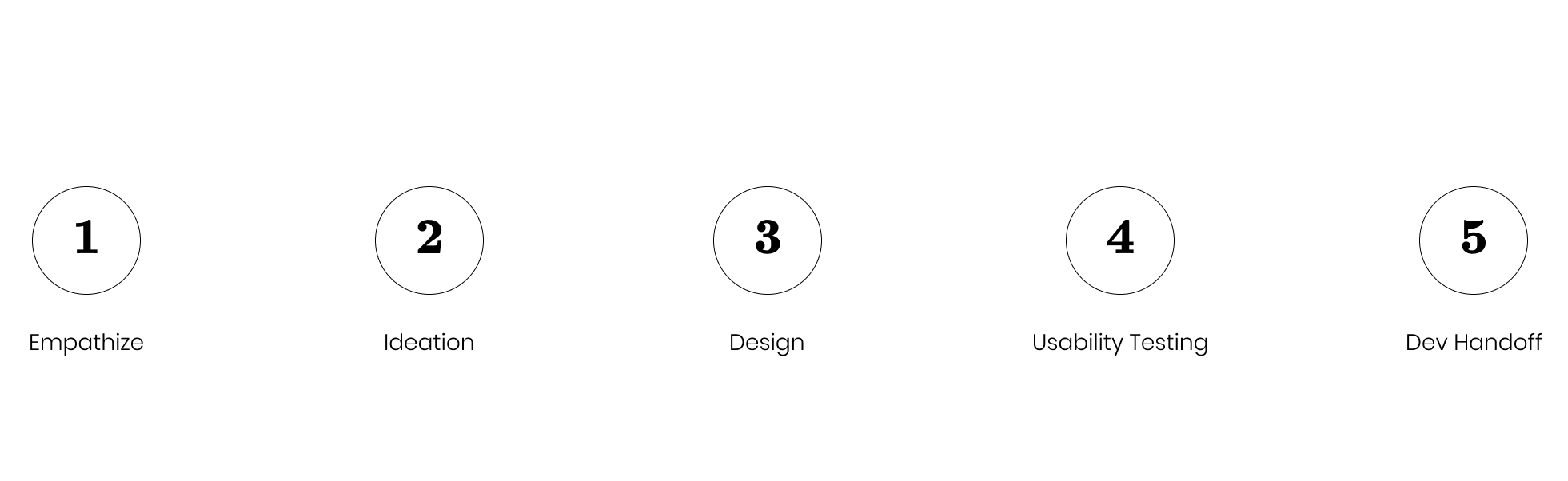
Design Process

Discovery

01

Housekeeping

Keeping a clean and organized hub is an important part of the process for me.

This Notion page included:

  • Project Plan
  • Weekly Meeting Notes
  • Project Timeline
  • Risk Ledger
  • Decision Tracker
  • Any additional documents

Not only did it help keep the project organized, but this also helped establish trust with the client.

A look into our project plan in Notion

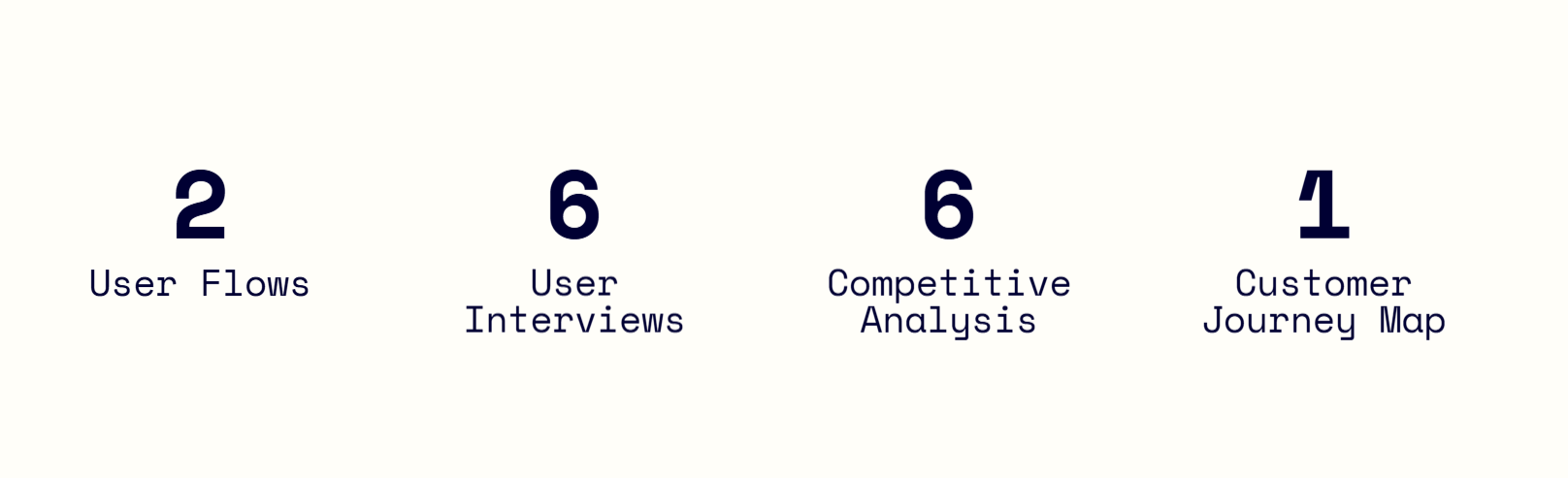
We conducted 6 user interviews with our target audience such as social media managers, marketing leads, and hotel managers.

Through these conversations, we identified:

01 Target Audience

  • targeting Gen Z & Millennials
  • most interact with photography/visual content
  • shift towards UGC

02 Pain Points

  • managing 10+ posts at a time
  • inconsistent ROI = budget issues
  • unexpected sneaky fees
  • high-cost acquisition but low ROI

03 Marketing Goals

  • booking conversions
  • brand awareness
  • brand engagement (community)
  • exclusive curated experience access

04 Useful Analytics

  • Daily, weekly, monthly views
  • Graphs, heat-maps, charts = visual components
  • user behavior changes
  • click through rates

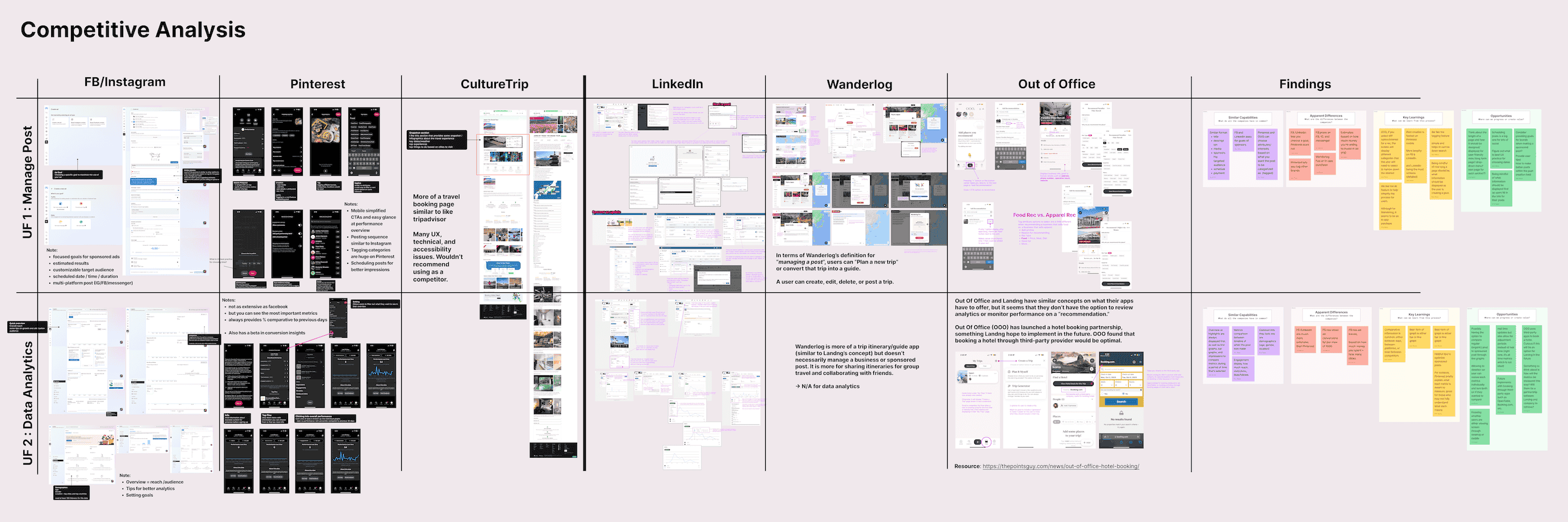
What is this? Our messy (but real) exploration of our main competitors and a summary of our findings.

Competitive Analysis Findings

Our extensive analysis clarified some commonalities in our competitors that were imperative we included in our new designs.

  • The simplest, quickest posting experience (~3 min)
  • A tagging feature for seamless collaborations with other brand partnerships
  • Quick and simple analytics view of each area of data (engagement, saves, clicks, etc.)
  • An additional in-depth analysis of data
  • $ driven ad performance
  • Users can choose an Ad goal to determine the purpose of the campaign (ex: engagement, awareness, sales)

User Persona

Define

02

Product Questions:

  1. User Needs:
    • How can we simplify campaign management and improve ROI tracking for travel brands?
    • What features (e.g., tagging, analytics) are most valuable to users?
  2. Functionality:
    • How can we ensure quick (~3 min) and seamless campaign posting?
    • What ad goals (e.g., engagement, sales) should users be able to set?
  3. User Experience:
    • How can we design an intuitive, visually-driven platform for Gen Z/Millennials?
    • What dashboard design provides actionable insights without overwhelming users?
  4. Competition:
    • What unique features can differentiate Landng from competitors?
  5. Scalability:
    • How can we ensure the platform scales with growing users and campaigns?

Business Goals:

  1. Increase ROI:
    • Help travel brands track and measure campaign ROI effectively.
  2. Drive Conversions:
    • Focus on delivering measurable booking conversions for hotels and accommodations.
  3. Enhance Engagement:
    • Foster community engagement through UGC and influencer collaborations.
  4. Simplify Management:
    • Streamline campaign creation, posting, and tracking for brands.
  5. Provide Insights:
    • Offer clear, visual analytics (e.g., heatmaps, graphs) for data-driven decisions.
  6. Build Trust:
    • Establish Landng as a reliable platform for consistent results.
  7. Expand Reach:
    • Target Gen Z/Millennial travelers and position Landng as the go-to influencer marketing platform.
  8. Monetize Effectively:
    • Develop a pricing model (e.g., subscriptions) and explore premium features for revenue growth.

Ideate

03

Sketching

I always start the ideation process through pen and paper sketches. I feel my ideas flow best through:
  • low-risk designing
  • quick and easy modifications
  • multiple seamless iterations
  • jotting down ideas for key functions and overall flow

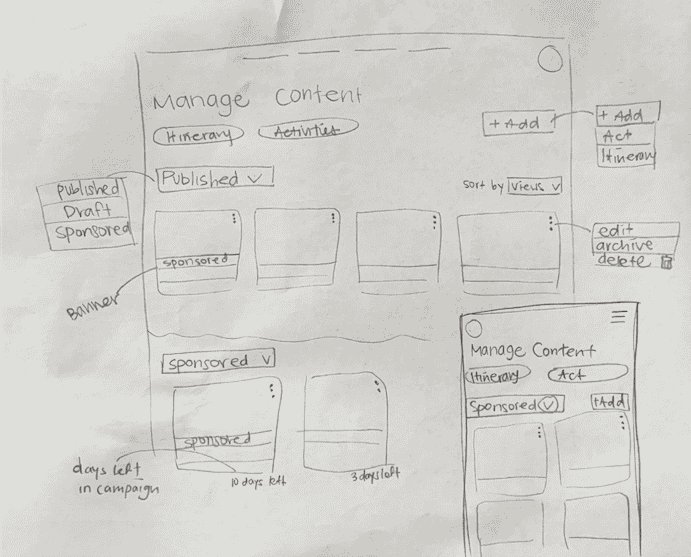
What is this? An exploration of restructuring the Manage Content page to include our new sponsored post features.

User Story 1:

As a social media marketer, I want to sponsor my post as a paid ad so that I can enhance visibility and boost click-through rates.
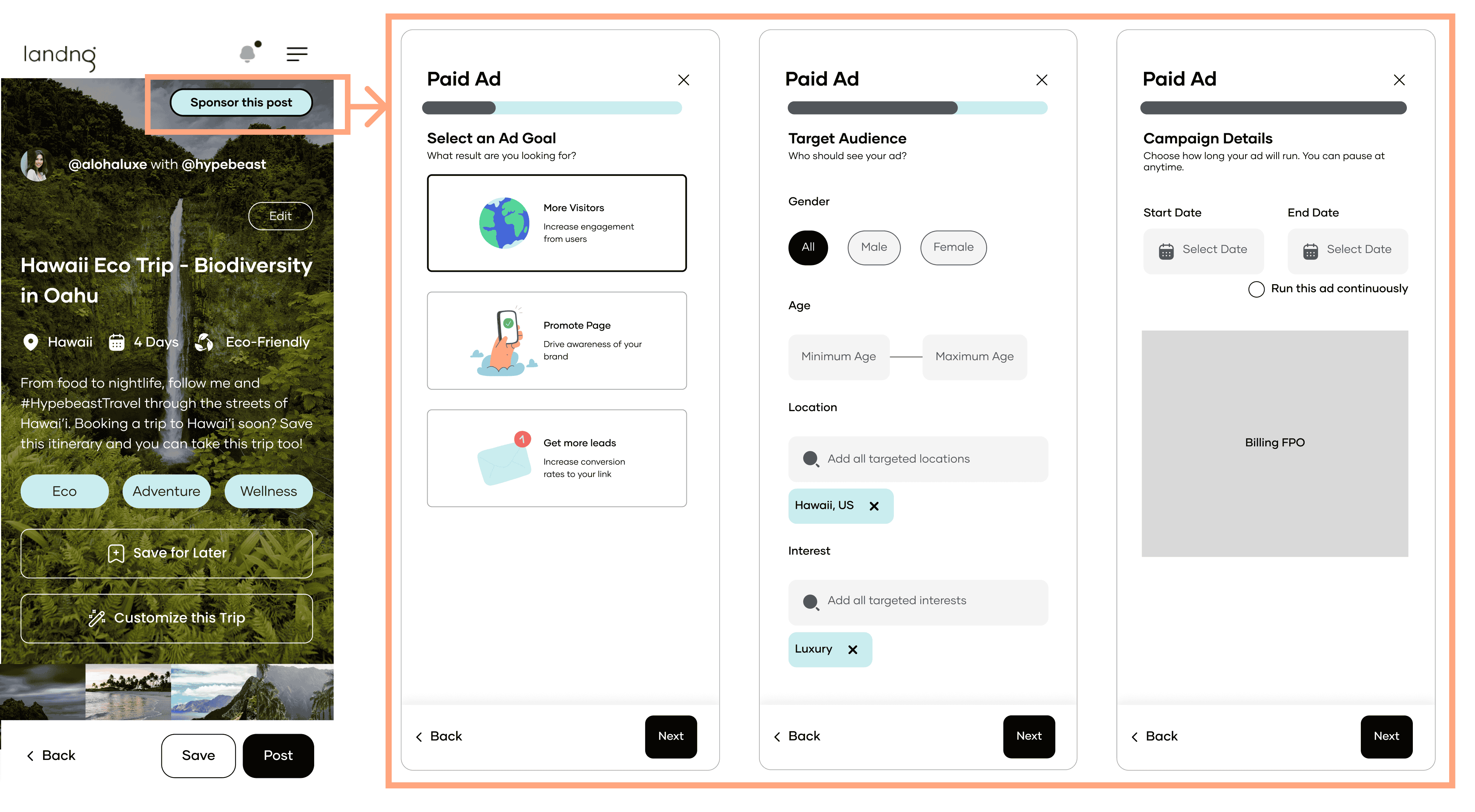
Once an itinerary is created, a brand partner can "sponsor post" and start a campaign for targeted paid ads.

User Story 2:

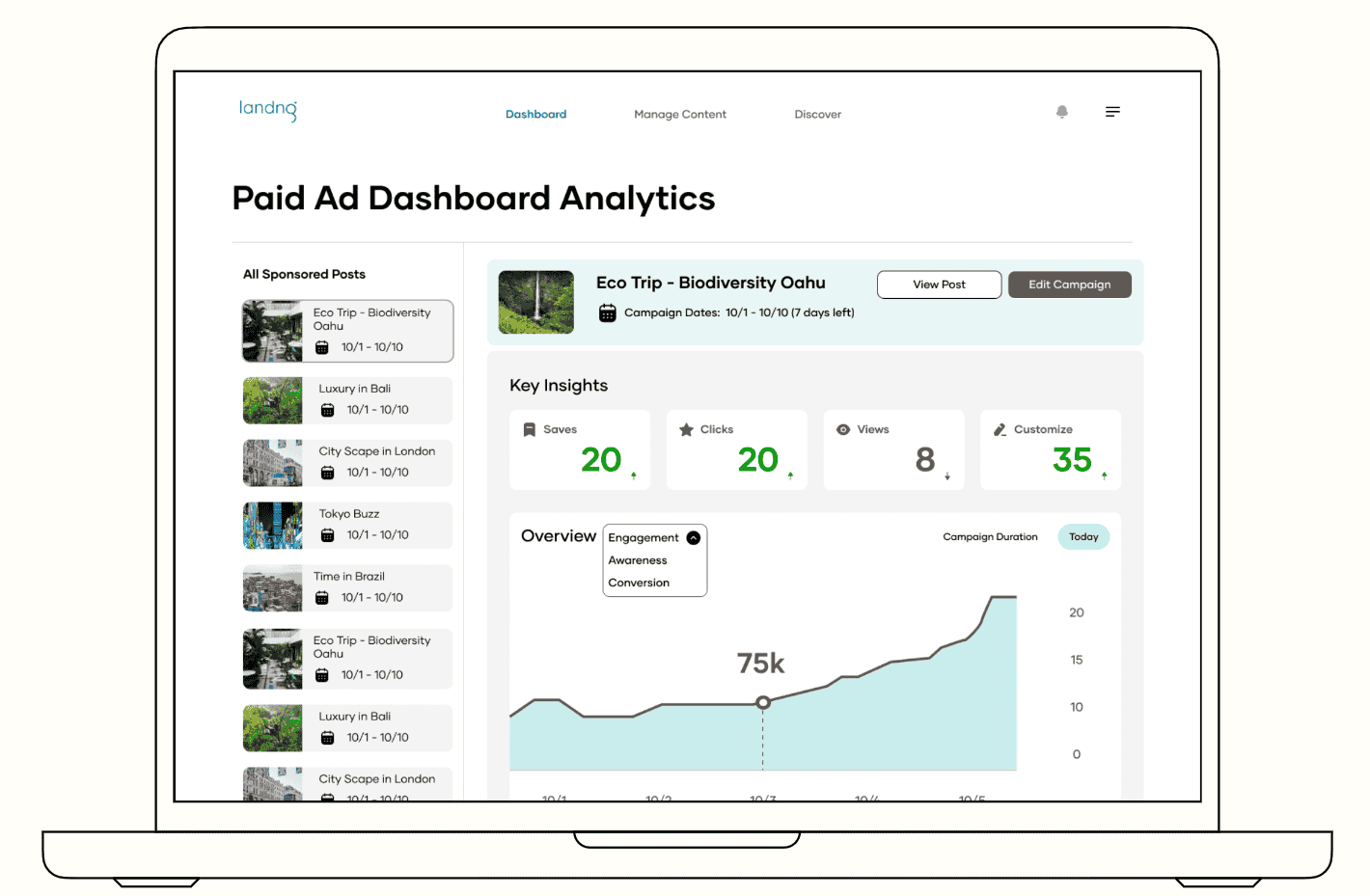
As a social media marketer, I want to closely monitor my paid ad analytics to track specific KPIs aligned with my advertising objectives.
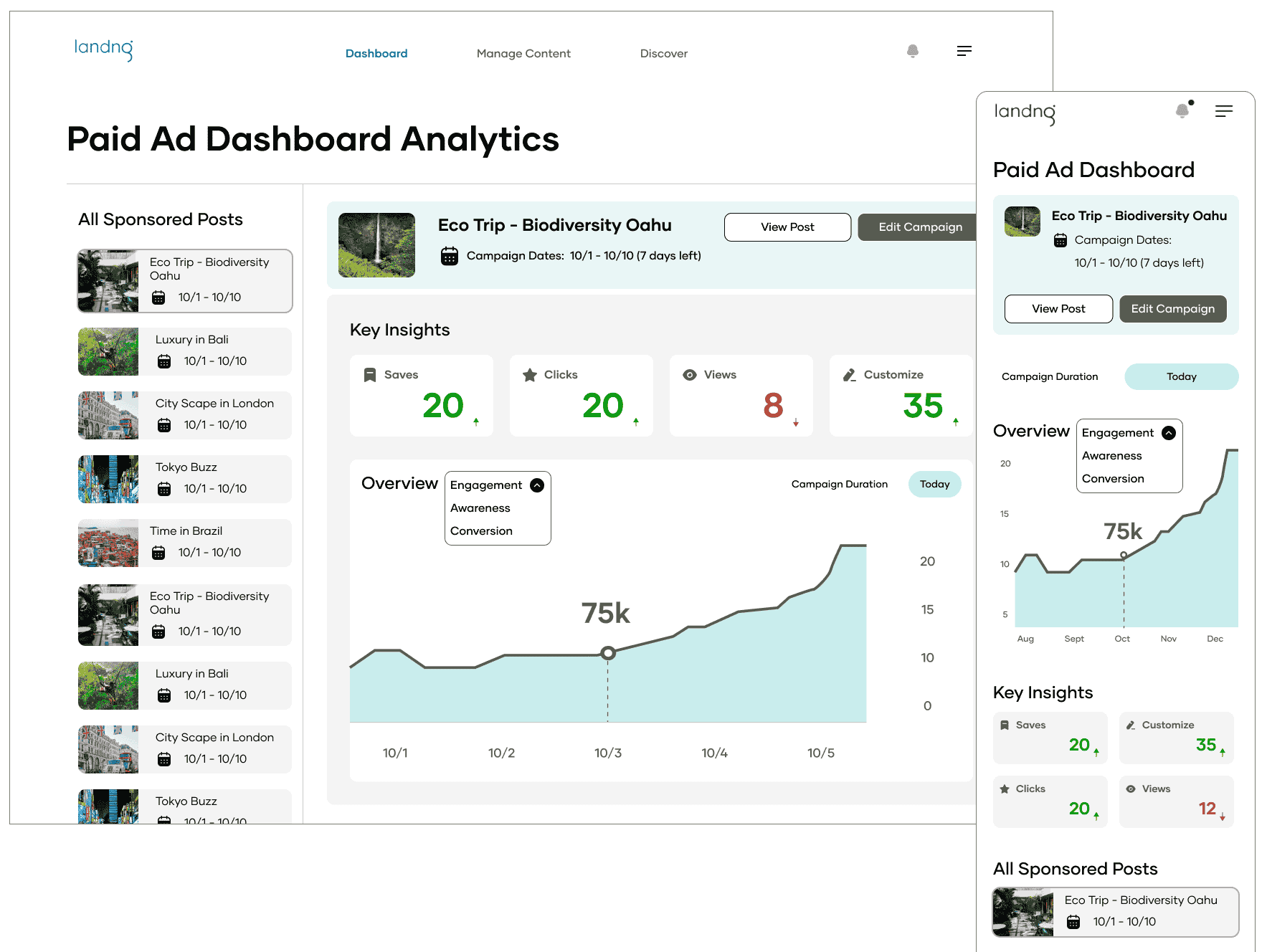
A brand partner can see real-time data on their ad performance in 3 key areas (engagement, awareness, and conversion).

Prototype

04

High Fidelity

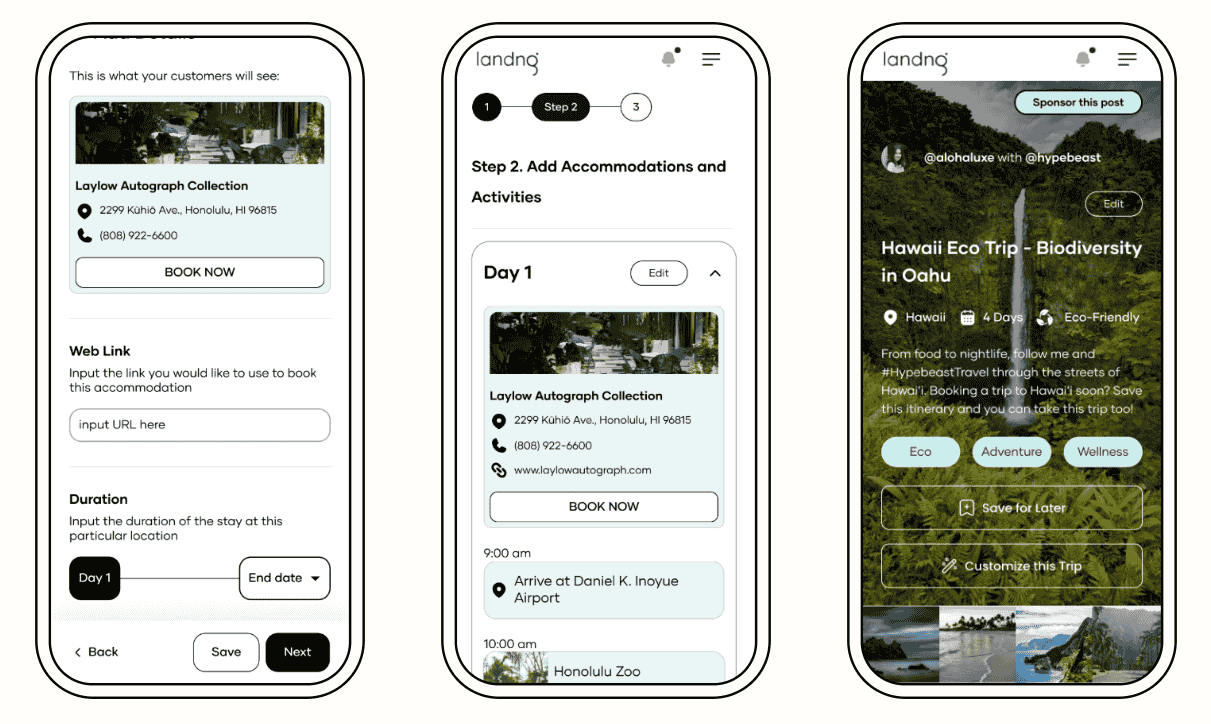
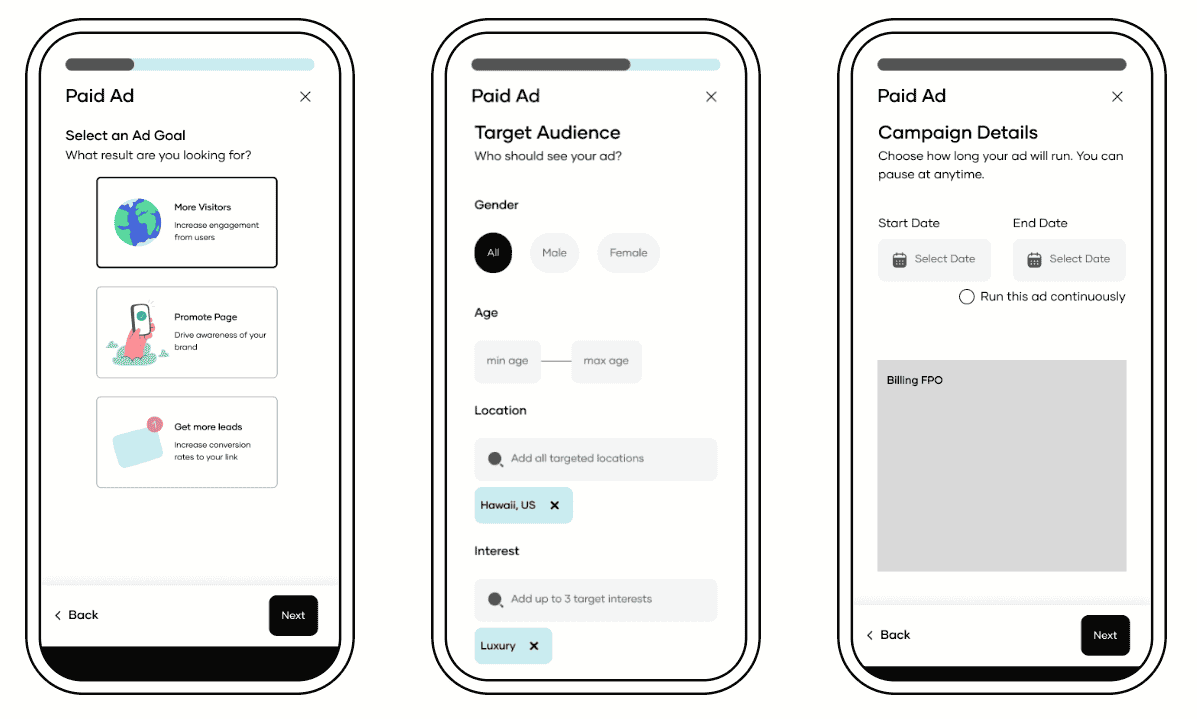
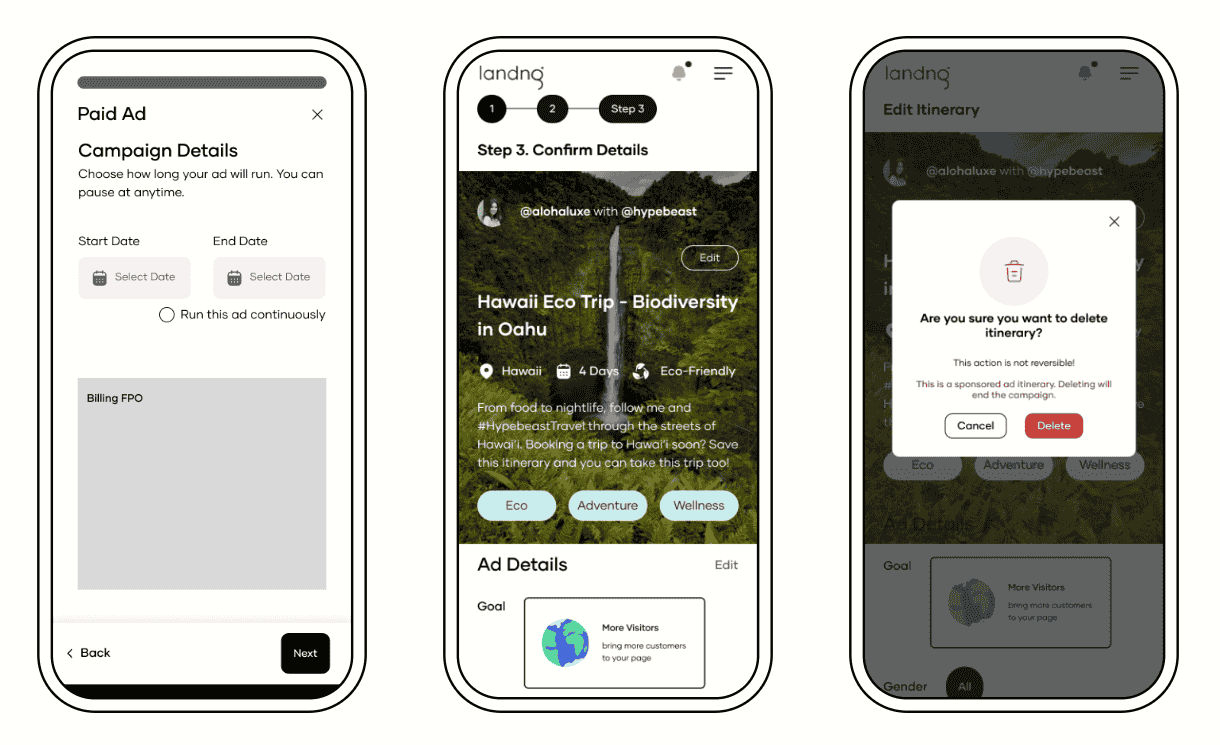
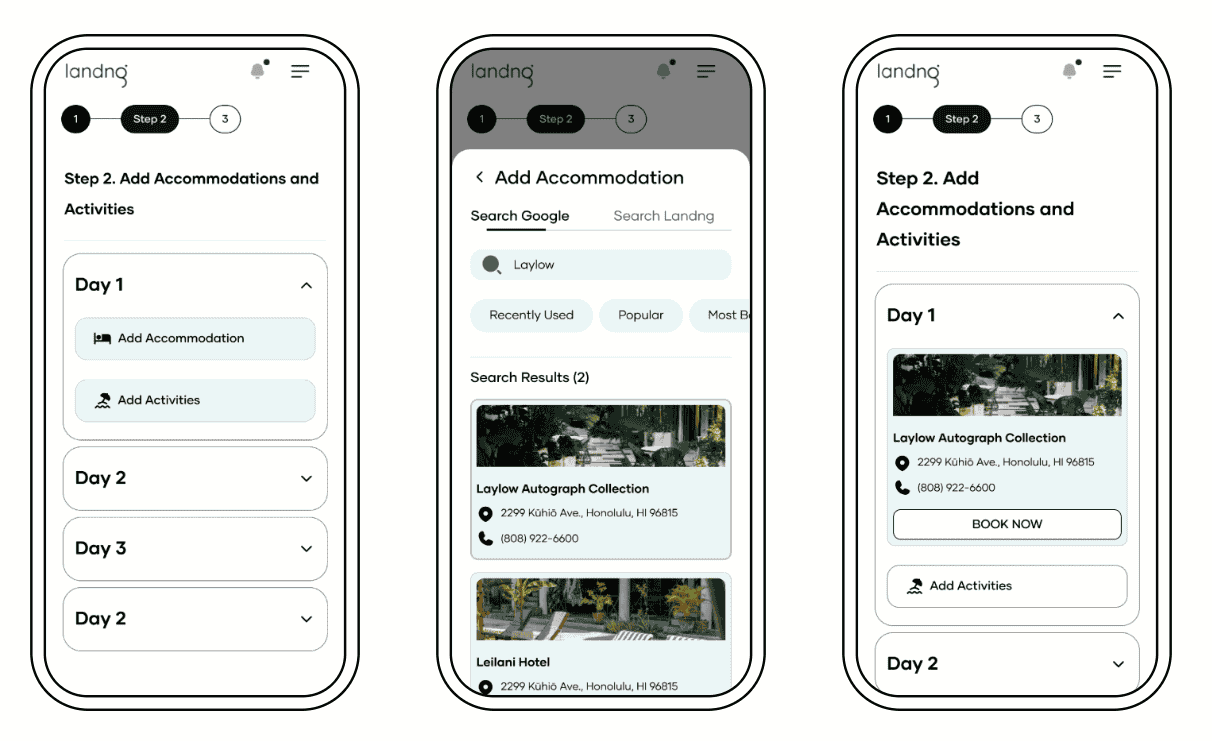
The final mobile flow of creating an itinerary > sponsoring post > deleting itinerary
Test

05

Due to the time crunch, we were able to conduct only a few usability tests, but we were able to identify areas with usability issues that needed to be addressed.

Iterations - Booking CTA

Some feedback highlighted confusion when adding details to their itinerary.

Our solution:
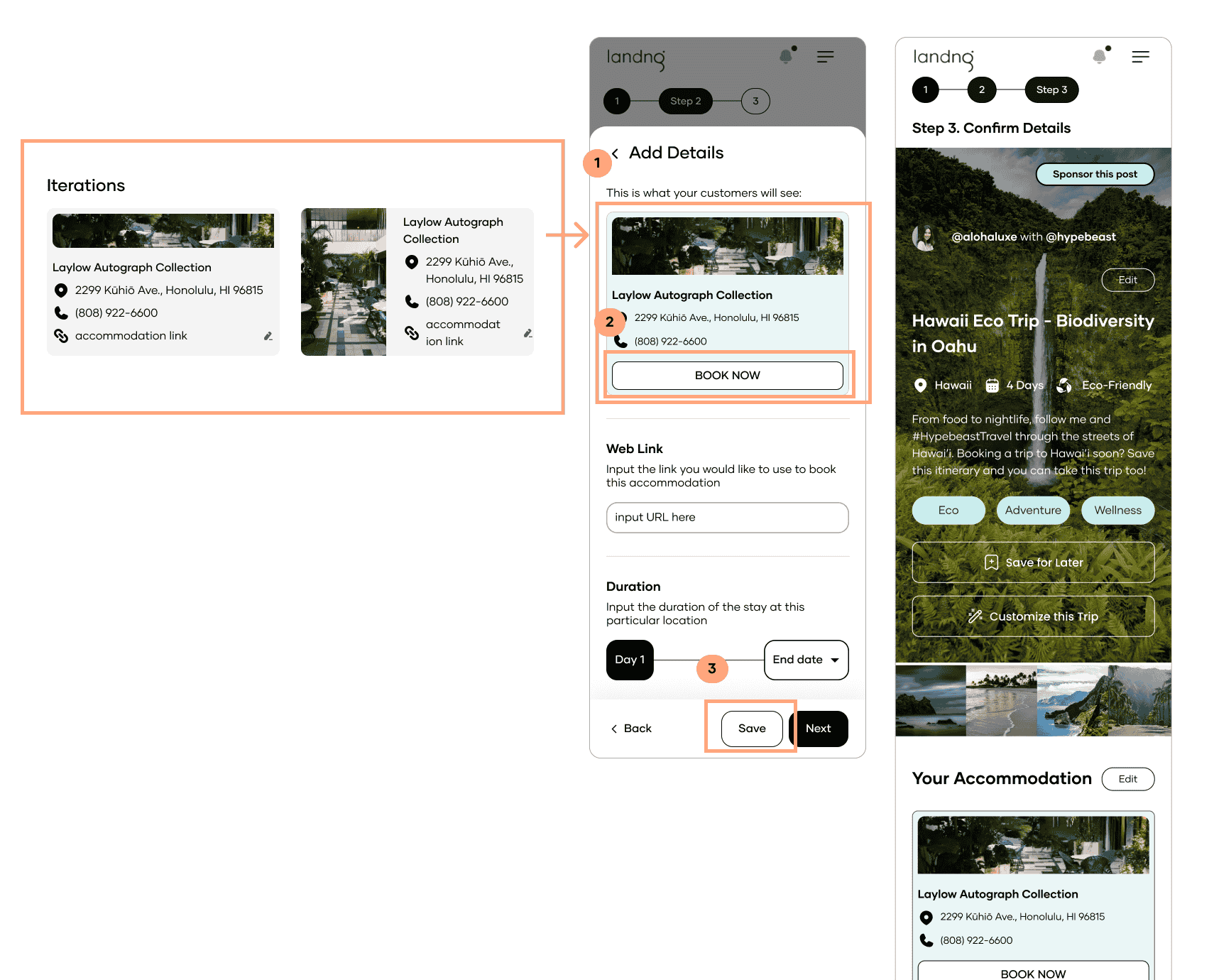
  1. A different visual treatment for accommodations as this will be the main revenue model for the MVP
  2. The click-through rate would be measured by the booking CTA, delivering real-value conversions
  3. Filling out all the information felt daunting so we added a Save button.

Enhanced visual treatment on the booking CTA that tracks conversion.

Iterations - Accommodations vs Activities

As we shifted our target users to Hotels and Accommodations, we needed to prioritize adding accommodations info in their itineraries which was already a cumbersome flow.

Our solution:
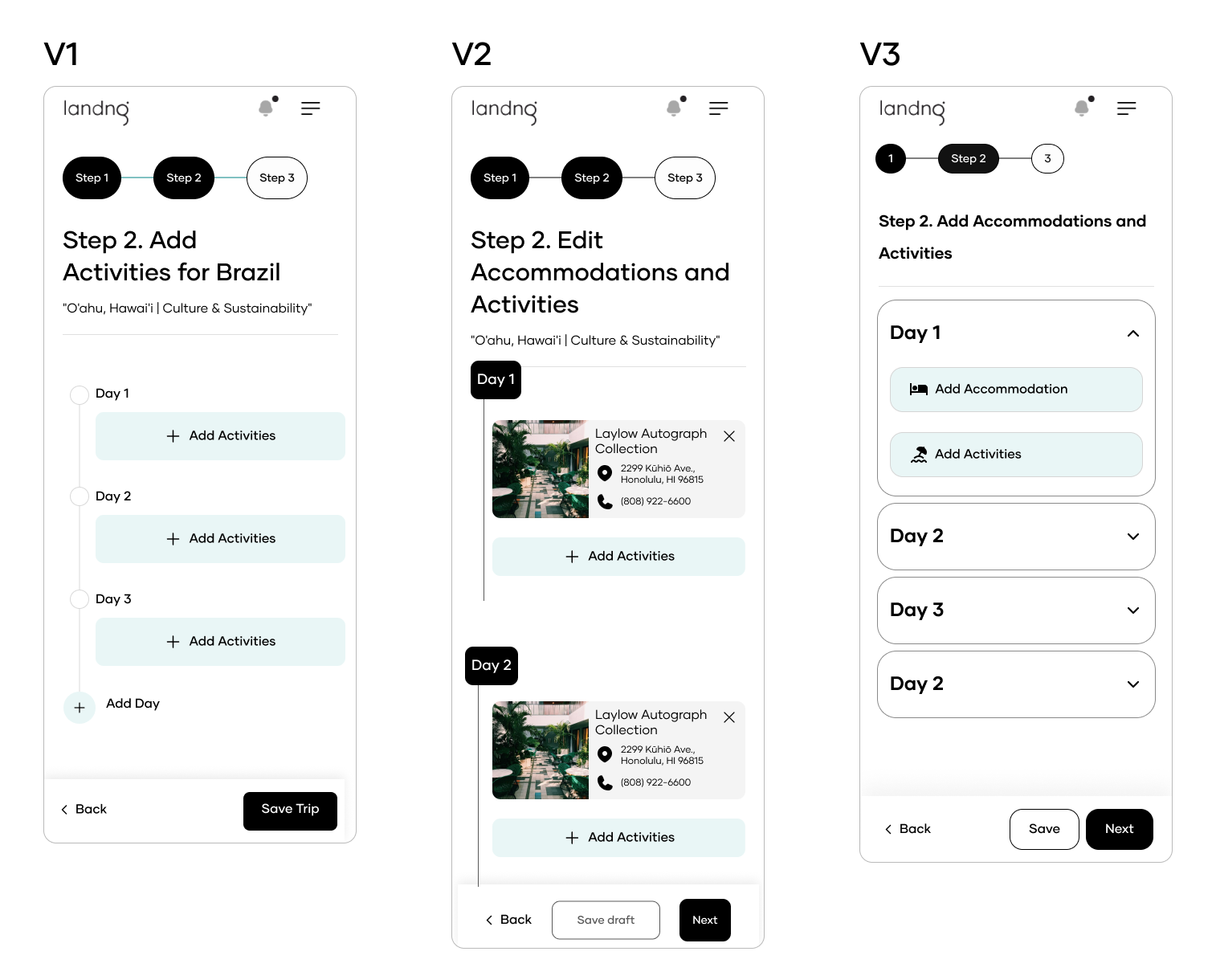
  • Clearly defining the next step as adding accommodations before activities when creating an itinerary
  • Utilized related icons for accessibility
Prioritize adding accommodations when setting up an itinerary.

Key Patterns.

  • User-Centric Design: Targeted Gen Z/Millennials with insights from user interviews; prioritized visual content and UGC trends.
  • Efficient Workflows: Simplified posting process, prioritized accommodations setup, and enhanced booking CTAs for conversion tracking.
  • Performance & Scalability: Real-time analytics, usability testing for refinement, and plans for AI integration to enhance future growth.
  • Looking Forward.

    I'd love to measure our success by,

    • conducting usability testing with social media managers we originally interviewed to identify pain points
    • track CTA conversions through the clickable link
    • monitor retention and gather user feedback

    Additionally, there are a lot more improvements to be made in the design system as Landng continues to expand. I also see an extension with the use of AI becoming an integral part of the product, and would love to see that come to life!

    Looking Back.

    In an 8-week sprint,

    • we produced over 80+ wireframes
    • I facilitated 16 team meetings
    • I mentored 1 junior designer
    • I updated 32 components
    • I had 118 cups of coffee

    I truly appreciate the opportunity given to lead this project and feel extremely proud of what we produced. Staying within scope felt somewhat challenging, as there were times when I could envision more ways to contribute, but this provided an opportunity to inform clients of best practices and make updates in hopes of laying the foundations for a solid design system.